Saturday , 14 March 2026

Strategies

How Not to Outlive Your Nest Egg

2026-02-15 MunKnee - How Not to Outlive Your Nest Egg

Rising life expectancy increases the probability that retirees may outlive their savings if portfolios are not managed efficiently and with discipline. This article outlines some practical considerations for selecting a financial advisor, including fiduciary standards, compensation structure, professional credentials, investment philosophy, and regulatory history. Investors who apply structured evaluation criteria may reduce conflicts of interest and improve long-term retirement outcomes through disciplined portfolio management and professional oversight.

Read More »

The Changing Correlation Between the U.S. Dollar and the Stock Market

Changing Correlation Between the U.S. Dollar and the Stock Market

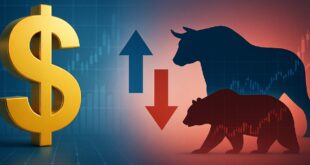
The historical relationship between the U.S. dollar and the U.S. stock market has shifted from a weak positive correlation to a stronger inverse pattern. While global capital flows once linked a stronger dollar to rising U.S. equities, recent years show the opposite movement as risk-on and risk-off dynamics dominate. During risk-off periods, investors seek safety in the dollar, pushing it higher as equities fall. Conversely, a weaker dollar often aligns with a stronger global risk appetite. This article examines this correlation and the implications for investors.

Read More »

The Gold-Silver Ratio as an Indicator of Economic Conditions and Risk Appetites

2025-10-23 Notes from the Rabbit Hole - Gold Silver Ratio - 30-Year US Treasury

Gary Tanashian of Notes From the Rabbit Hole (NFTRH) analyzed the Gold-Silver Ratio (GSR) throughout 2024–2025 as an indicator of risk sentiment and economic liquidity. A rising GSR suggested market caution, stronger dollar performance, and silver underperformance, while a falling ratio reflected potential reflation trends and risk-on behavior. Tanashian emphasized that investors should combine GSR analysis with additional indicators such as the HUI gold miner index, U.S. dollar trends, and Treasury yields. He also introduced the 30-year Treasury yield “Continuum” to interpret whether GSR shifts represent lasting market signals or temporary reactions.

Read More »

Why July 4 Still Matters to Investors

Munknee-Independence Day Investing_SM

Independence Day has long been a symbol of resilience and innovation in the United States, and these values continue to drive investment strategies. From clean energy and biotechnology to artificial intelligence and reshoring, U.S. companies are at the center of key growth sectors. A new investment approach, known as “patriotic investing,” focuses on backing businesses that strengthen the U.S. economy and reduce reliance on imports. Rising defense spending, infrastructure projects, and national security initiatives are reshaping capital flows. Even seasonal patterns, like the “Independence Day Effect,” show how July 4 can influence markets in the short term.

Read More »

AI Drives Growth Among Leading Tech Stocks

2024-12-17 AI and the Magnificent 7

The Magnificent Seven tech stocks, Alphabet (NASDAQ:GOOGL), Amazon (NASDAQ:AMZN), Apple (NASDAQ:AAPL), Microsoft (NASDAQ:MSFT), Meta Platforms (NASDAQ:FB), Nvidia (NASDAQ:NVDA), and Tesla (NASDAQ:TSLA), continued to lead the tech industry in 2024, largely due to their investments in artificial intelligence. But the companies have had varying degrees of success with their AI efforts in 2024. Nvidia, Meta, Microsoft and Amazon have done particularly …

Read More »

$10,000 Gold May Be Too Conservative A Target

$10,000 may be too conservative of a price target for gold up ahead with a lot of pain before we get there, both in commodities and the broad market. A deflationary bust is coming that will wipe out most asset categories, before stagflation takes hold, the Fed intervenes, and commodities skyrocket to previously unimaginable levels.

Read More »

Here’s What Happened To the Markets in the Past Few Days

On Monday morning, investors woke up to plunging stock markets with media headlines suggesting that the sell-off was due to fears of a recession, slowing employment growth, and fears over Israel and Iran, but those were not the primary reason why. In fact, it was the forced unwinding of the “Yen Carry Trade.” Let me explain.

Read More »