 munKNEE.com Your Key to Making Money
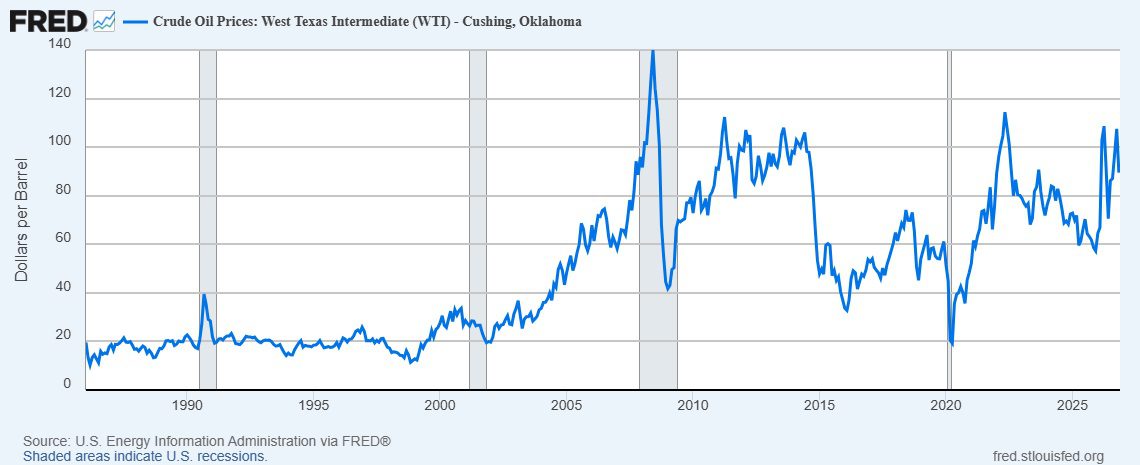
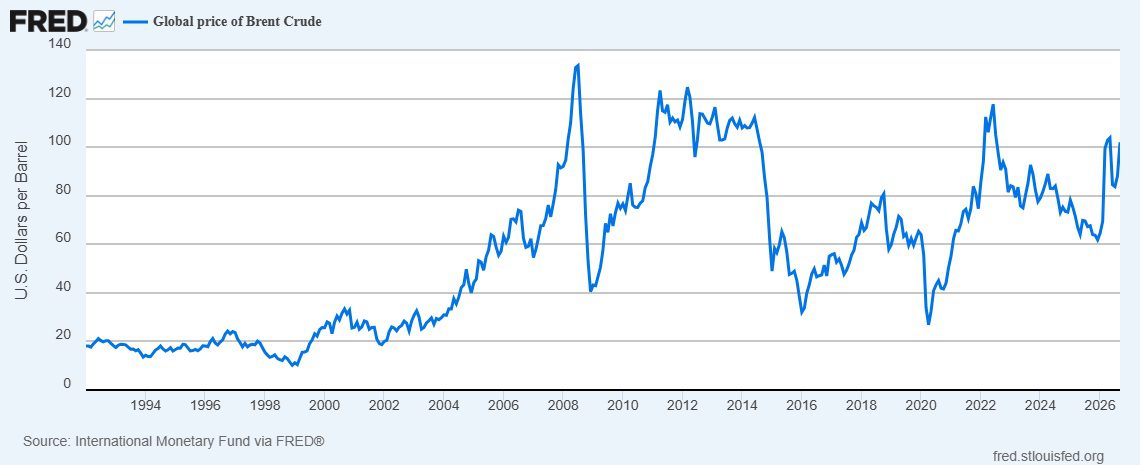
Once global economic and industrial activity picks up, it is only a matter of time before oil returns to the tight supply environment experienced in 2008, 2022, and, most recently, the Gulf supply shock experienced in 2026.
The oil price surges are not an anomaly; they are warning signs that a structural oil crisis is unfolding and poses significant threats to future economic growth.
The industry needs to act to avert this crisis, given that major oil discoveries take 5 to 10 years to come into production and the US shale patch is maturing rapidly.
Equity and option players need to listen to veteran energy leaders laying out what they see as the core energy fundamentals for sound energy policy today:
Fact No. 1: Hydrocarbons
Hydrocarbons continue to account for roughly 80% to 86% of the global energy mix. While renewable energy, nuclear power, and energy storage are gaining traction to serve growing electricity demand and to reduce carbon intensity, hydrocarbons will remain the primary energy sources to power the global economy for many decades to come.
Oil in particular will continue to dominate the market for heavy-duty transport, aviation and petrochemicals, as Renewables alone are not nearly scalable or as dispatchable to meet such demands in a timely manner to offset declining production from existing fields.
Fact No. 2: Oil Demand
There is strong underlying oil demand growth as global industrial activity and transport normalize from recent lows. When global industrial and transport activity does normalize, underlying oil demand is expected to trend up over the medium term.
This is driven by a growing global population, which is expected to rise from over 8.2 billion today to 9.7 billion by 2050, with the bulk of this growth coming from emerging markets around the world.
Hydrocarbon energy, led by oil, is essential to supporting rising living standards in emerging markets around the world.
Another critical factor is the growth in transport and the increase in petrochemicals consumption. While vehicle ownership in mature markets such as the US has plateaued at saturation levels, emerging markets in Asia, Latin America and Africa will need vast amounts of hydrocarbon energy, led by oil, as they strive to close the motorization and industrialization gaps.
Fact No. 3: Oil Supply
While we are not running out of oil and the world is sitting on 1.5 trillion barrels of it, having already extracted 1.5 trillion, there is a big difference between having oil and being able to produce it.
With the largest and easiest-to-extract oil reserves having been tapped, and the high cost and complexity of extracting others such as heavy oil, oil sands, and deepwater oil, most new oil is being produced in deepwater frontier areas of the world such as deepwater Guyana, Brazil, and offshore West Africa.
Production from natural oil fields is declining at a rate of 5-8% per year. Thus, global production of some 102-105 million barrels per day would have to be increased by some 5-8 million barrels per day in order to remain constant.
However, this required increase in production is further exacerbated by growing demand, with the result that the industry is stuck on a treadmill of having to add more and more supply every year.
FIGURE 1: Crude Oil Prices WTI (1986-2026)
Stated another way…
(1) Hydrocarbons remain central to global energy security.
(2) Long-term oil demand growth in developing economies and hard-to-abate sectors will remain resilient.
(3) We are not running out of oil. The issue lies in oil production capacity growth falling short of the mark to compensate for natural field decline, as well as to meet projected increases in demand over the next 5-10 years.
(4) So, in the end, we will continue to be prone to supply rationing and price spikes above $100 per barrel, which can have severe consequences for economic growth and stability. It will take a long period of time and considerable investment to avoid another oil shock in 5 to 10 years.
FIGURE 2: Crude Oil Prices Brent Crude (1992-2026)
A growing number of energy strategists, commodity experts and market analysts have, over the past few years, increasingly focused on the challenge of ensuring sufficient supply of oil with due consideration of the long-term constraints.
The commodity research departments of big investment banks, such as Goldman Sachs, J.P. Morgan and Bank of America, for example, have repeatedly stressed that years of disciplined investment in oil field development, geopolitical risk, and maturing shale inventories all suggest that oil remains highly prone to large price spikes, whenever there is a shortage of spare capacity and resulting supply rationing.
Also, from an investment perspective, strategies are being recommended that seek out companies with large volumes of low-cost and long-lived reserves. Large integrated oil companies have recently increased their scale of operations via very large mergers and acquisitions, for example, the recent merger of Chevron with Hess.
However, small and highly liquid exploration and production companies with a high beta to the price of crude and a direct ‘torque’ to the price of oil can deliver large gains when oil is above triple digits $/bbl.
The current global demand for oil has risen from the 84-87 million barrels per day level in 2011 to around 102-105 million barrels per day today. This is being monitored by bodies such as the International Energy Agency (IEA) and OPEC, which, between them, follow supply increases and falls, as well as political chaos and demand increases.
While in the short term the price of crude may drop as supply increases or if there are downward pressures in the wider economy, the long-term trend in oil of higher demand than supply remains strongly in the favor of the oil bulls.
Thanks for reading! If you want more articles like the one above, register to receive our FREE newsletter. Or visit our Facebook page and follow us so you can get future articles automatically delivered to your feed. Or you can also “Follow the munKNEE” on Twitter.
Remember: munKNEE should be in everybody’s inbox and MONEY in everybody’s wallet!