Thursday , 5 March 2026

MDC Staff Writer

America’s Inability to Increase Revenues Via Higher Personal Taxes Could Cause the USD to Crash
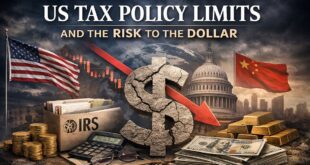
2026-02-15 MunKnee - America’s Inability to Increase Revenues

Do higher marginal tax rates materially increase federal revenue? Behavioral responses among high-income taxpayers, the impact of enforcement capacity on compliance, and other implications of restoring pre-2017 tax rates all affect the results. The discussion highlights how income adjustments and structural deficits may limit the effectiveness of rate increases. With annual federal deficits exceeding one trillion dollars in recent years, constrained revenue elasticity, combined with elevated spending, could affect investor confidence and long-term demand for US dollars.

Read More »

How Not to Outlive Your Nest Egg

2026-02-15 MunKnee - How Not to Outlive Your Nest Egg

Rising life expectancy increases the probability that retirees may outlive their savings if portfolios are not managed efficiently and with discipline. This article outlines some practical considerations for selecting a financial advisor, including fiduciary standards, compensation structure, professional credentials, investment philosophy, and regulatory history. Investors who apply structured evaluation criteria may reduce conflicts of interest and improve long-term retirement outcomes through disciplined portfolio management and professional oversight.

Read More »

A Cynical Guide to Reading Mutual Fund Brochures

2026-02-15 MunKnee - A Cynical Guide to Reading Mutual Fund Brochures

This article provides a satirical translation of common phrases used in mutual fund marketing materials. While terminology such as Core, Diversified, Sustainable ESG, Impact Focused, Aggressive Growth, and Enhanced may suggest discipline or innovation, the underlying strategies are often more conventional than labels imply. Investors are encouraged to interpret marketing language with greater scrutiny and context.

Read More »

Is Climate Policy About Power or the Planet?

2026-01-11 US and Canada Are Global Warming Scapegoats

This article examines the historical development of global climate policy and questions why certain countries have become central targets of emissions reduction efforts. It traces the evolution of climate change from early environmental conferences through the creation of the IPCC, the Paris Agreement, and recent COP summits. The analysis reviews differentiated national commitments, the selection of the 1990 emissions baseline, and Europe’s relative ease in meeting targets. It further explores the role of the United Nations, global governance frameworks, and international institutions in shaping climate policy outcomes that place greater economic pressure on North America.

Read More »

Does Copper Now Have More Upside Than Gold

2026-01-11 Does Copper Now Have More Upside Than Gold

Gold has surged to record levels, reinforcing its role as a monetary hedge, but the question for 2026 is whether upside is becoming more limited. Copper, by contrast, is increasingly tied to structural demand from electrification, artificial intelligence infrastructure, and global industrial expansion. While gold is largely held as a store of value, copper is consumed as a critical input across power generation, data centers, transportation, and manufacturing. With inventories tight, prices elevated, and strategic stockpiling accelerating, copper may be positioned for a stronger relative performance cycle as global capital spending shifts toward energy and technology infrastructure.

Read More »

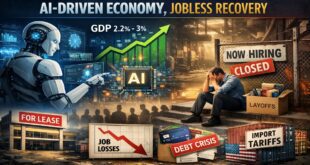
How AI Is Creating a Recovery Without Workers

As of early 2026, economic data points to steady GDP growth, yet labor market conditions tell a different story. Investment in artificial intelligence is supporting output and corporate margins, while hiring remains subdued and worker mobility constrained. Historical recoveries show employment often lags growth, but current conditions suggest a deeper structural shift. Automation, policy constraints, and uneven access to technology are reshaping how growth is generated and who benefits from it. The result is an expansion that favors capital over labor, raising concerns about income durability, consumer demand, and long-term economic stability if workforce participation continues to weaken.

Read More »

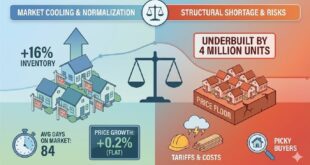
The Great Housing Market Normalization of 2025

2025-12-30 The US Housing Market

The 2025 housing market shifted toward normalization as inventory climb 16.4% and homes remained on the market for an average of 84 days. Despite a structural shortage of 4 million units keeping prices stable, demand has become increasingly selective across a "patchwork" of local markets. Macroeconomic factors, including Federal Reserve interest rate policy and Trump administration tariffs, are introducing new volatility into construction costs and supply chains. With 39% of listings now seeing price cuts, the market is finding a new equilibrium. This analysis explores why today’s softening differs from past cycles and what the new policy risks mean for buyers in 2026.

Read More »

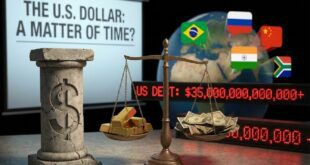
The U.S. Dollar: Too Much of a Good Thing?

The US Dollar - Too Big to Fail

Is the U.S. dollar, as the primary global reserve currency, under threat? While the dollar maintains its position through the petrodollar system and military backing, structural risks such as the $38.4 trillion national debt and the diversification of foreign reserves pose challenges. What could trigger a monetary shift? A gold revaluation? Debt defaults? Investors should consider the strategic importance of physical gold as a hedge against currency transitions and the long-term erosion of purchasing power.

Read More »

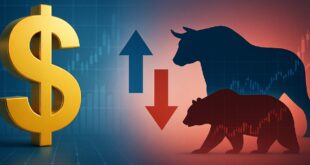
The Changing Correlation Between the U.S. Dollar and the Stock Market

Changing Correlation Between the U.S. Dollar and the Stock Market

The historical relationship between the U.S. dollar and the U.S. stock market has shifted from a weak positive correlation to a stronger inverse pattern. While global capital flows once linked a stronger dollar to rising U.S. equities, recent years show the opposite movement as risk-on and risk-off dynamics dominate. During risk-off periods, investors seek safety in the dollar, pushing it higher as equities fall. Conversely, a weaker dollar often aligns with a stronger global risk appetite. This article examines this correlation and the implications for investors.

Read More »

The Gold-Silver Ratio as an Indicator of Economic Conditions and Risk Appetites

2025-10-23 Notes from the Rabbit Hole - Gold Silver Ratio - 30-Year US Treasury

Gary Tanashian of Notes From the Rabbit Hole (NFTRH) analyzed the Gold-Silver Ratio (GSR) throughout 2024–2025 as an indicator of risk sentiment and economic liquidity. A rising GSR suggested market caution, stronger dollar performance, and silver underperformance, while a falling ratio reflected potential reflation trends and risk-on behavior. Tanashian emphasized that investors should combine GSR analysis with additional indicators such as the HUI gold miner index, U.S. dollar trends, and Treasury yields. He also introduced the 30-year Treasury yield “Continuum” to interpret whether GSR shifts represent lasting market signals or temporary reactions.

Read More »