 munKNEE.com Your Key to Making Money
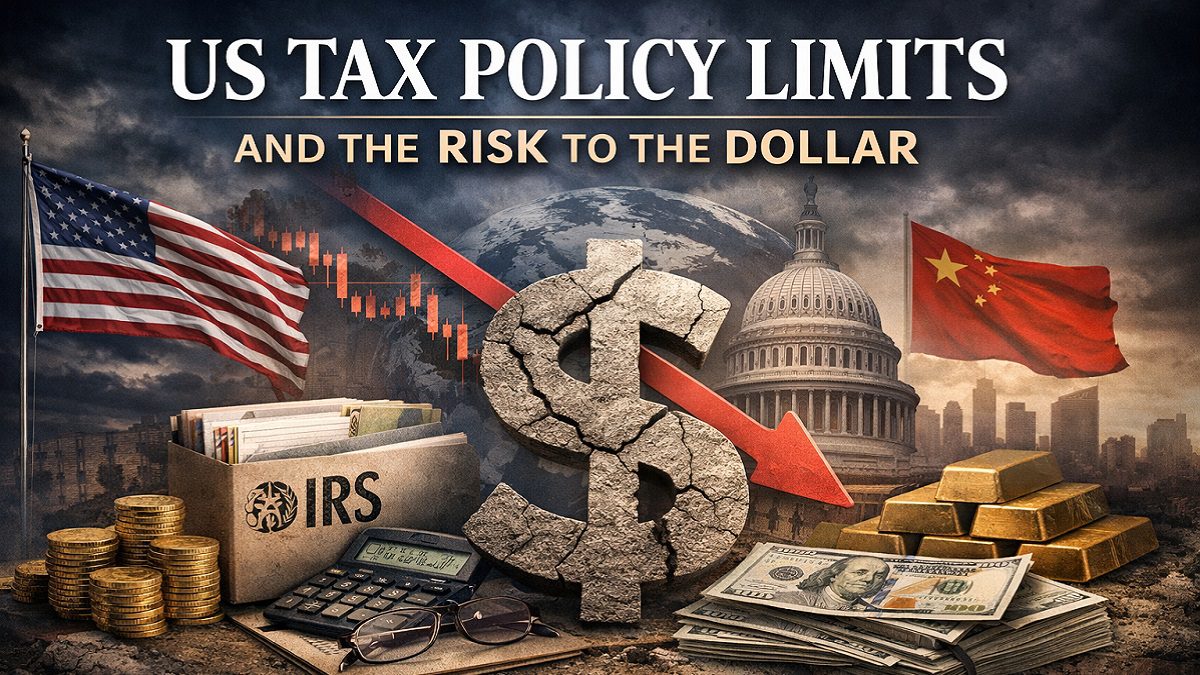
A dollar crash might happen because foreign investors decide that the U.S. has fallen into a so-called tax trap, which occurs when a nation is unable to increase revenue by lifting tax rates. This circumstance, paired with mounting deficits, can lead to wholesale flight from a nation’s assets.
Foreign creditors will only lend money if they think we will pay it back. China and other central banks have increased their gold reserves in recent years as part of broader reserve diversification strategies.
Diminishing Returns from Higher Marginal Rates
The graduated U.S. income tax system may be approaching a point where higher marginal rates yield diminishing revenue returns, particularly if rates are restored to pre-2017 levels.
While proposals periodically surface to increase taxes on higher-income households, lifting only the top marginal rate can produce unintended revenue effects. High-income taxpayers have greater flexibility in timing income, restructuring compensation, increasing deductions, or shifting assets, which can reduce the taxable base subject to higher rates.
Behavioral Response and Revenue Math
When tax rates go up, wealthy individuals have many options to reduce their tax bill. With a tax rate of 37%, for every dollar of income reduction, the government loses 37 cents. After the adjustment occurs, the government collects revenue via the higher rate applied to what is left.
If you lift the marginal rate from 37% to 45%, assuming taxpayers adjust their incomes lower, then you lose 37 cents for every dollar of income reduction, while getting back 8 cents on every dollar that is left in the top bracket. The revenue effect depends on how much income adjusts, and how much income is left in the top bracket after that adjustment. Whether the policy produces meaningful gains depends on how much taxable income stays in the bracket after those adjustments.
Enforcement and the Tax Base
Revenue performance is also influenced by enforcement capacity. Changes to IRS funding levels and audit intensity can affect compliance rates, particularly among higher-income taxpayers and pass-through entities.
Although the 2017 tax cuts were originally set to expire in 2025, which would have restored the top rate to 39.6%, the One Big Beautiful Bill Act of 2025 made the 37% top rate permanent. But, there are proposals to restore it to 39.6% for high earners to address the federal deficit.
The top income tax rate kicks in for a married couple at more than $730,000. Everyone with an income above that will face the higher rate, and some adjust their taxable income down accordingly. Some academic studies have estimated that high-income taxpayers reduce reported income by several percentage points following rate increases.
Proposals for additional surtaxes on high-income households have periodically surfaced in recent budget negotiations. Within the top tax bracket, the lower the income, the more people there are with that income. You have to collect a lot more money from the richest taxpayers in the bracket to offset the revenue losses from those at the bottom of the bracket as they make moves to avoid the tax by lowering their income. The net revenue raised by these tax changes is likely to be tiny.
Structural Deficits and the Fiscal Outlook
Annual federal deficits in recent years have exceeded $1 trillion and, in some years, have approached or surpassed $1.5 trillion. In fact, however, the higher tax rates, especially when paired with expanded spending commitments, are going to make it worse.
When investors see that higher taxes deliver little new revenue while spending soars, they will head for the exits. The dollar will be dead, and the tax trap will have killed it.
Thanks for reading! If you want more articles like the one above, register to receive our FREE newsletter. Or visit our Facebook page and follow us so you can get future articles automatically delivered to your feed. Or you can also “Follow the munKNEE” on Twitter.
Remember: munKNEE should be in everybody’s inbox and MONEY in everybody’s wallet!