 munKNEE.com Your Key to Making Money
Most people think that everyone is referring to the same type of “shale oil” when they hear the word. Surprisingly, they are not.
For decades, shale oil referred to oil extracted from kerogen-rich rock by a process known as pyrolysis. Now, however, the term is employed to refer to oil extracted from shale rocks through hydraulic fracturing, or “fracking”. Both are shale rock, but they are very different resources and very different technologies are used to extract them.
This confusion has caused many to think that the big shale oil reserves that were mentioned in the older energy reports are already being pumped now. In fact, the vast kerogen-rich deposits of oil shale that were the subject of much media attention decades ago are largely untapped, and most of today’s “shale oil boom” is from fracked oil wells.
The Original Shale Oil Story
The saying, “You can’t squeeze blood out of a stone,” is an apt one. Yet that is essentially what the original concept of shale oil involves.
Oil shale is a rock that contains a waxy organic material called kerogen. Kerogen is not a fully-matured into liquid crude oil. The rock has to be heated to very high temperatures, called pyrolysis, to make useful oil. The thermal treatment releases kerogen and turns it into a synthetic crude oil, which is subsequently refined to produce fuels and other petroleum products.
Oil shale can be described as a rock filled with many of the same organic compounds that are in crude oil, but in a solid state. The same organic matter that created the normal oil became trapped in rock before the natural process of transformation could be finished.
Some energy analysts see oil shale as a huge future energy source. Others claim that it will be challenging to scale economically due to the high cost, environmental issues, and water usage.
What is not disputed is the size of the resource.
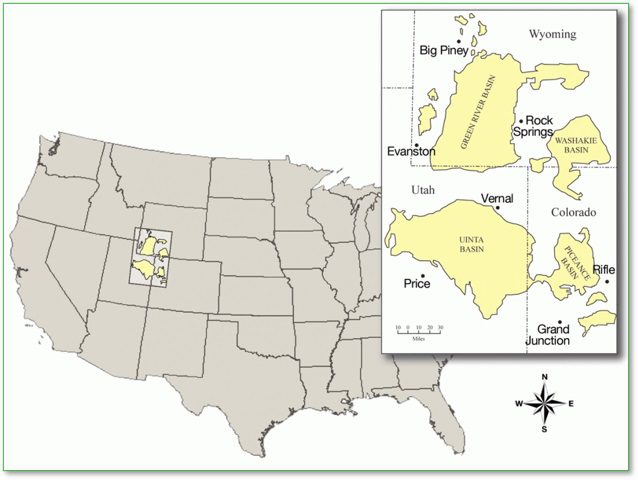
The Green River Formation is one of the largest oil shale deposits in the world and is found under portions of Colorado, Utah and Wyoming. There are estimates that it holds the equivalent of trillions of barrels of oil trapped in the rock. Even a small portion of these resources could be economically recovered and the energy potential would be significant.
Canada, Brazil, China, Russia, Jordan, Estonia, Morocco, Australia and other Middle Eastern nations also have large oil shale deposits.
FIGURE 1: Oil Shale Resources
The Shale Oil Produced Today
But when financial news outlets today talk about shale oil production, they’re talking about something very different.
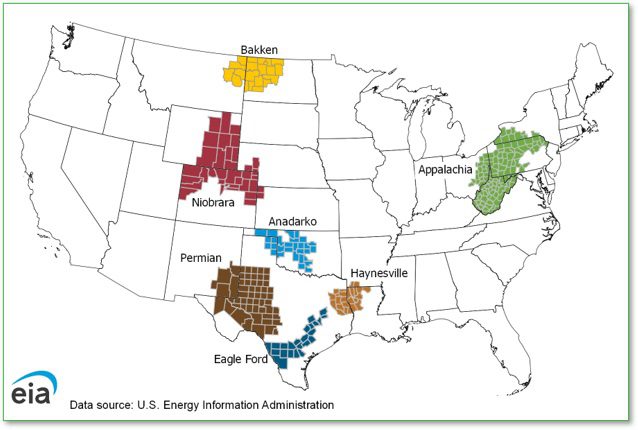
Most modern shale oil production is from the tight oil formations of the Permian Basin, Bakken Formation and Eagle Ford Shale. In these formations, the oil is already in the form of crude oil. The problem is that it is stuck in very tight rock formations that do not permit the oil to flow freely.
These resources are tapped by drilling long horizontal wells and fracturing the rocks with water. The process will enable the oil to enter the borehole and be brought to the surface.
This process doesn’t involve mining the rock or heating kerogen through pyrolysis, unlike oil shale. The oil is already present and all that is needed is a way to flow.
This technology changed the way energy is produced in North America. The U.S. Energy Information Administration (EIA) estimates that shale and tight oil production represents some 9.3 to 9.5 million barrels per day (MMbpd) of U.S. crude oil production, making the U.S. one of the world’s largest producers.
However, the story does not end there. While much of this light crude is refined domestically, the U.S. imports heavy crude (from Canada, Mexico, and historically Venezuela) while exporting portions of its light oil production to overseas refineries that are better suited to process it.
The difference between light and heavy crude becomes important when considering whether either form of shale oil could eventually replace heavy oil imports.
FIGURE 2: Major U.S. Shale Regions
Can oil shale or modern shale oil production be a substitute for Canadian heavy oil?
There’s no easy answer.
Many U.S. refineries, especially in the Gulf Coast and Midwest, were built to handle heavier crude oils, including significant amounts of Canadian oil sands crude. Canadian heavy crude is now a vital feedstock for these facilities, a result of decades of investment in refining equipment designed to process the crude.
Much of the current oil produced from shale formations is lighter and sweeter than Canadian heavy crude. While most of this shale oil is refined domestically, the surplus is exported.
The oil from kerogen-rich oil shale would likely be upgraded to a synthetic crude oil prior to entering the refining system. Most refineries can process synthetic crude, but it tends to be more similar to a light crude oil than the heavy crude oil that is imported from Canada.
Therefore, even if the commercialization of large-scale oil shale production was to occur, it would not replace Canadian heavy crude on a one-to-one basis. Major refinery changes, blending programs or extra upgrading capacity may be needed.
That’s why energy markets can be more complex than just the question of how much oil is underground.
So How Long Could Shale Oil Last?
It all depends on the shale oil you’re referring to.
The U.S. is already producing approximately 9.3 to 9.5 million barrels per day of modern shale oil, using fracking technology. The amount of production will ultimately depend on drilling activity, economics, technological advances and future oil prices.
The potential life span is much greater but much more uncertain for traditional oil shale resources like the Green River Formation. The resources are vast, but commercial production is still not possible. The future of these resources as a significant source of energy will depend on the development of extraction technology, environmental management and economics.
The irony is that the world’s largest shale oil resource may not be the shale oil that is in the news these days. The vast kerogen deposits that gave birth to the term “shale oil” have been largely ignored, as technology and economics have not yet come to terms with their potential.
Thanks for reading! If you want more articles like the one above, register to receive our FREE newsletter. Or visit our Facebook page and follow us so you can get future articles automatically delivered to your feed. Or you can also “Follow the munKNEE” on Twitter.
Remember: munKNEE should be in everybody’s inbox and MONEY in everybody’s wallet!